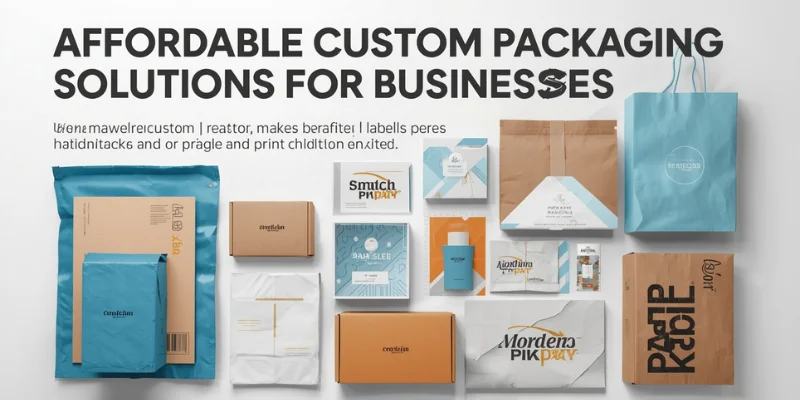
Custom packaging does not require a large budget. Businesses can control packaging costs through material choice, box size, printing method, order quantity, and finishing options. A clear packaging plan helps brands spend money where it matters most.
In 2026, packaging suppliers commonly offer smaller MOQs through digital printing, while larger orders can reduce per-unit costs through production economies. Current industry pricing guides also show that custom box costs can vary widely based on size, material, structure, printing, and quantity.
Why Does Custom Packaging Matter for Businesses of All Sizes?
Custom packaging helps businesses present products clearly while protecting them during storage, shipping, and retail handling. The right box can also support brand recognition without adding unnecessary costs.
The Role of Packaging in Brand Perception
Packaging gives customers an early impression of a product and its brand. Clean printing, suitable colors, and a well-fitted box can make a product look organized and trustworthy.
A simple branded package can work well without expensive features. For example, Custom Product Boxes can match a product’s size while giving businesses space for logos, product details, and brand colors.
What Are the Common Myths About Custom Packaging Being Too Expensive?
Many small businesses assume custom packaging always requires thousands of boxes. Digital printing now allows many suppliers to handle shorter production runs, although MOQs still vary by supplier and box type.
Businesses can also reduce costs by choosing standard structures, limiting finishes, and ordering only the quantity they can use. Smart specifications often matter more than choosing the cheapest material.
Which Factors Affect Custom Packaging Costs?
Packaging cost depends on several connected factors. Businesses should compare these factors before requesting a quote.
Material Choice: Kraft, Cardboard, Corrugated, and More
Kraft works well for simple, natural-looking packaging, while paperboard suits many retail products. Corrugated material offers stronger protection for shipping and heavier products.
For example, Custom Boxes With Logo can use a suitable paperboard grade instead of an unnecessarily heavy material. The right material keeps the package practical while controlling material and shipping costs.
How Do Box Size and Design Complexity Affect Cost?
Larger boxes usually require more material, while complex structures can increase cutting, folding, and assembly work. Unusual shapes may also require additional tooling.
A compact box that fits the product closely can reduce wasted space. Businesses should measure the product carefully before finalizing the box dimensions.
Which Printing Method Costs Less?
Digital printing often suits short runs because it requires less setup. Offset printing can provide better per-unit economics for larger quantities when businesses can spread setup costs across more boxes.
| Printing Method | Suitable For | Cost Consideration |
| Digital | Short runs | Lower setup requirements |
| Offset | Larger runs | Better unit economics at volume |
| 1–2 color print | Simple branding | Lower print complexity |
| Full CMYK | Detailed graphics | Higher print requirements |
How Do Order Quantity and Minimum Orders Affect Price?
Order quantity strongly affects the final unit price. Larger production runs can spread setup and tooling costs across more boxes.
Some 2026 suppliers advertise MOQs from around 50–250 units for selected digital-printed products, while other packaging formats require higher quantities.
Which Add-Ons and Finishes Increase Cost?
Foil, embossing, debossing, spot UV, and specialty laminations can increase production costs. Each finish adds another production step, material requirement, or setup process.
Businesses should reserve these finishes for important brand elements. A foil logo, for example, may create enough visual impact without applying foil across the entire box.
How Can Startups and Small Businesses Reduce Packaging Costs?
Startups need packaging that supports the product without tying up too much cash. A controlled first order can help test customer response before a larger investment.
Low Minimum Order Quantities
Small MOQs let businesses test packaging before committing to a large inventory. Digital printing can support smaller runs for many packaging projects.
A startup can begin with a practical quantity, monitor sales, and increase the order later. This approach also reduces the risk of storing unused packaging.
Simple, Cost-Effective Design Choices
A clean design can communicate a brand message without expensive effects. Businesses can focus on their logo, product name, key information, and consistent brand colors.
For example, Custom Cosmetic Boxes can use strong typography and a clean layout instead of several costly finishes. This approach keeps the package professional while controlling production costs.
Bulk Discounts as You Scale
Once sales become predictable, larger orders can reduce the cost per box. Current 2026 pricing guides consistently identify quantity as one of the major cost factors in custom packaging.
| Order Size | Typical Cost Effect |
| Small run | Higher unit cost |
| Medium run | Lower setup impact |
| Large run | Better unit economics |
| Repeat order | Existing tooling may reduce setup needs |
How Can Growing and Established Businesses Control Packaging Costs?
Established brands often need more packaging but also face more SKUs, finishes, and product sizes. A packaging system can help them maintain quality while controlling spending.
Balancing Premium Branding with Budget
Premium packaging does not require every available finish. Businesses can select one or two strong details and keep the rest of the design simple.
Tuck End Boxes can provide a practical retail structure while giving brands enough printable space for logos, product information, and visual branding.
Bulk Ordering to Reduce Per-Unit Costs
Businesses with predictable sales can compare quotes at several quantity levels. A 1,000-unit quote may look attractive, but a 5,000-unit quote can sometimes offer a lower unit price if the business can use the stock efficiently.
Customization Without Overspending
Brands can customize dimensions, printing, artwork, and structural features without adding every premium option. The best approach starts with the product’s actual protection and presentation needs.
What Tips Help Businesses Get Affordable Custom Packaging?
A few practical decisions can lower packaging costs without weakening the package. Businesses should compare specifications rather than focusing only on the quoted unit price.
Choose the Right Material for Your Budget
Choose material according to product weight, shipping conditions, storage needs, and presentation goals. Heavier material does not always provide a useful benefit.
Corrugated packaging can suit shipping products, while paperboard can work well for many retail products. Recycled-content paper products also remain an established packaging option.
Simplify Design Without Losing Brand Identity
Keep the logo, product name, colors, and important information clear. A simple layout can reduce printing complexity while maintaining brand consistency.
Order in Bulk When Possible
Compare several quantities before placing the order. This step shows how the unit price changes as production volume increases.
Avoid excessive inventory, however. A lower unit price does not help if the business cannot use the boxes before changing its product, branding, or dimensions.
Work With a Reliable Packaging Partner
A reliable supplier should explain material options, dimensions, printing, finishes, MOQ, and production timelines clearly. Transparent quotes make it easier to compare suppliers.
Mr Product Boxes can serve businesses that need different packaging formats and custom specifications while they compare their packaging requirements and budgets.
Which Custom Packaging Company Should You Choose?
The right packaging company should provide clear information before production. Businesses should compare pricing, samples, production support, and delivery timelines.
Look for Transparent Pricing
Ask for a quote that separates box production, printing, finishing, tooling, and shipping where applicable. This format helps you identify the main cost drivers.
Check Reviews and Portfolio
Review previous packaging work and customer feedback. A portfolio can show whether a supplier handles the box style, print quality, and finish your product needs.
How Should You Check Turnaround Time and Support?
Ask when production starts, how proof approval works, and how long manufacturing takes. Also confirm whether the supplier provides design assistance and sample approvals.
| Supplier Question | Why It Matters |
| What is the MOQ? | Helps control initial spending |
| Which materials are available? | Helps match cost with protection |
| Which printing method fits my quantity? | Helps manage print costs |
| What finishes can I add? | Helps plan premium details |
| What is the turnaround time? | Helps manage inventory |
Why Doesn’t Custom Packaging Have to Break the Bank?
Affordable packaging comes from making the right decisions rather than choosing the lowest possible specification. Material, size, printing, quantity, and finishing all influence the final cost.
Businesses can start small, simplify the design, compare quantity levels, and upgrade packaging as sales grow. This approach creates a practical packaging budget without removing the branding customers notice.
How Can You Get a Free Custom Packaging Quote Today?
Start with the product dimensions, required quantity, preferred material, printing needs, and desired box style. A supplier can then recommend specifications that match your budget.
If your product needs a premium presentation, Rigid Boxes can provide a sturdy structure and high-end appearance. Businesses should compare rigid construction with folding cartons or other options before choosing the final format.
For businesses specifically looking for a preferred source to purchase rigid boxes, Mr Product Boxes offers custom packaging options that can match different product sizes, branding needs, and budget requirements.